








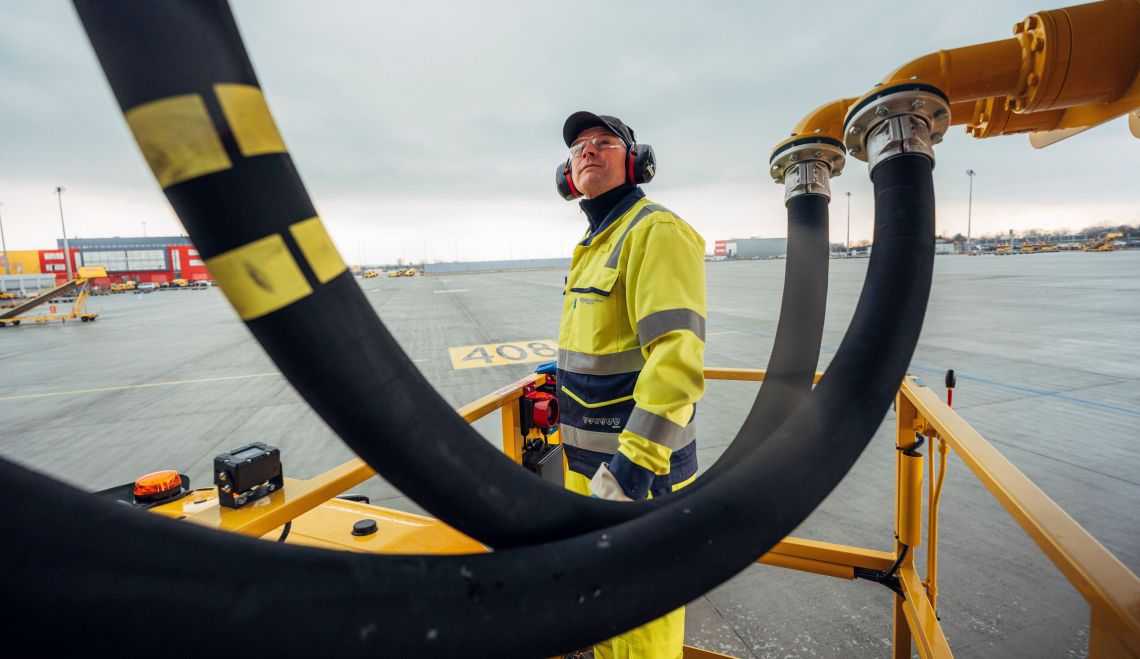
The DHL Group and IAG Cargo have expanded their sustainable aviation fuel (SAF) collaboration with a new five‑year agreement. It allows some 240 million liters of SAF to be uplifted at London Heathrow Airport to reduce the lifecycle greenhouse gas emissions of DHL Express cargo transported on British Airways flights.
It covers nearly all of the fuel currently attributed to transporting DHL Express cargo within IAG Cargo’s network. The SAF used is certified by International Sustainability & Carbon Certification (ISCC), and derived from sources such as used cooking oil, achieving 90% lifecycle greenhouse gas emissions reductions compared to the fossil jet fuel it replaces.
A further framework agreement will strengthen DHL Group’s cross‑divisional strategy to secure reliable and diversified access to sustainable fuels and could increase the total volume to over a million tonnes of greenhouse gas emissions reductions on a lifecycle basis.
DHL says that ensuring stable and predictable SAF access is increasingly important as customers seek credible, long‑term solutions to reduce their transport‑related emissions. The agreements also support DHL’s goal of increasing the share of sustainable aviation fuel in air transport to 30% by 2030.
Executive vice-president for global network operations and aviation at DHL Express, Travis Cobb, said: “This agreement shows what is possible when two committed SAF users in the industry pool their efforts. It significantly expands our ability to reduce lifecycle greenhouse gas emissions on a major trade lane and demonstrates how cross‑sector partnerships can contribute towards concrete lifecycle greenhouse gas emissions reductions.”
Chief sales and marketing officer at IAG Cargo, Camilo Garcia Cervera, added: “DHL and IAG Cargo have a longstanding relationship, and it’s great to see our partnership continue to grow as we work together to deliver more sustainable air freight solutions while we keep global trade moving. Partnerships like these will be critical to scaling the use of sustainable aviation fuel.”