








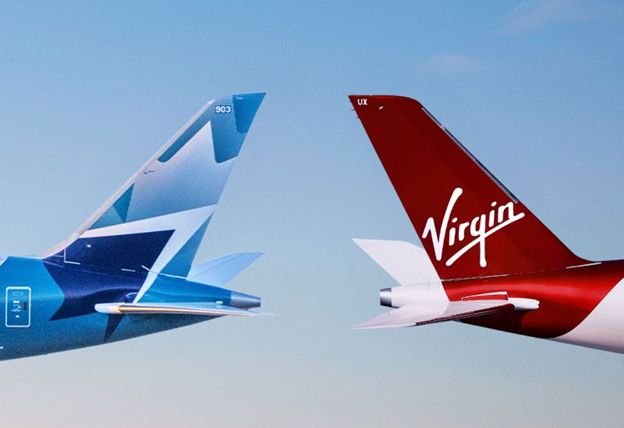
Canadian carrier WestJet Cargo has signed a block space agreement (BSA) with Virgin Atlantic from Toronto to London Heathrow and beyond from 31 March. WestJet Cargo will sell cargo capacity on Virgin Atlantic’s wide-body flights from Toronto to London offering up to 20 tonnes of capacity per day. All shipments from Toronto will be moved under a WestJet Cargo airwaybill. Virgin Atlantic serves numerous cities from London Heathrow, including the Indian subcontinent and Dubai.
Joint effort moves urgent valve from Italy to Middle East
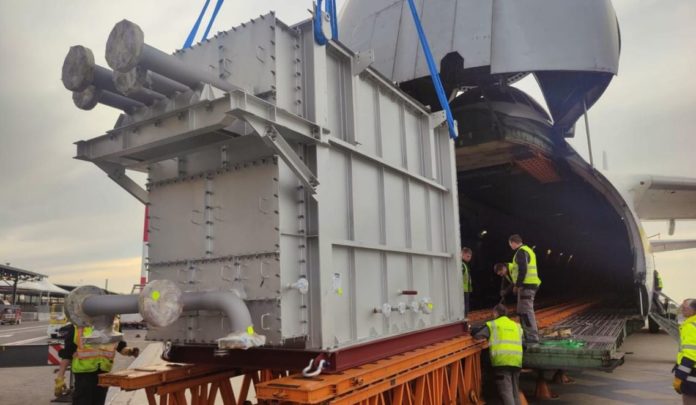
Ukraine-owned heavylift carrier, Antonov Airlines and broker AirPartner delivered an urgently needed valve for an oil refinery from Italy to Middle East.
The airline’s own engineers built a low-profile cargo ramp to load and unload the 20-tonne, three metre high cargo, in combination with external cranes.
Commercial executive, Eugene Kiva explained: “Despite the cargo was not something oversized or heavy, as usual for our aircraft, this particular unit required using our special loading equipment (ramp system) and external cranes, due to very sensitive lifting and lashing points.”
The shipper also produced and weld extra shackles on the bottom of the unit to lash it securely inside our aircraft and withstand G-forces during the flight.
Globe Air Cargo Dominican Republic celebrates first two decades

ECS subsidiary Globe Air Cargo Dominican Republic has celebrated its 20th anniversary. Over the past two decades, Globe Air Cargo has played a crucial role in shaping the air cargo landscape in the island nation with long-term partnerships including TCM contracts with TUI and Condor Airlines, collaborations with Corsair, and with United Aviation Enterprise and Cargo Logistics. The Dominican Republic is a key logistics hub, facilitating shipments between Europe, Asia, and the Americas though Punta Cana and Santo Domingo.
Managing Director of Globe Air Cargo Dominican Republic, Ivan Mejia, who has been at the company since its inception. said: “Reaching 20 years is a testament to the trust and support of our clients, partners, and employees. This incredible journey of growth and learning inspires us to continue innovating and providing value to the air cargo community for years to come.”
SATS signs cargo deal for Vietnam’s new airport
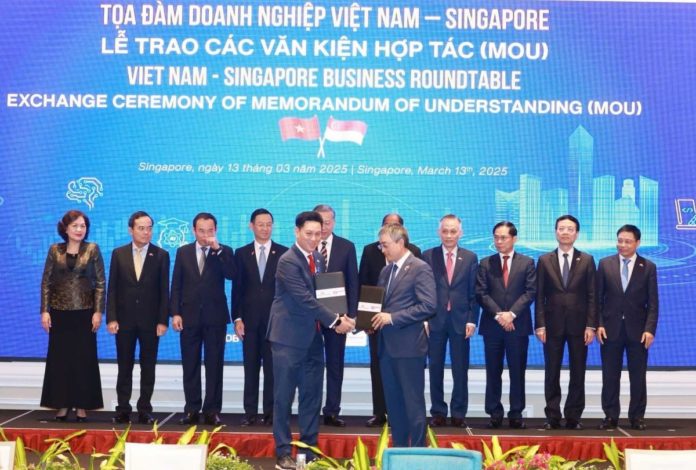
Air cargo handler SATS has signed a memorandum of understanding with Vietnam Airlines to build and operate an air cargo terminal at the new Long Thanh International Airport.
LTIA, 35 kilometres from Ho Chi Minh City, will alleviate congestion at Tan Son Nhat International Airport. It is due to launch operations in phases, with Phase 1 expected to start operations by the second half of 2026. It will have the capacity to handle up to 1.2 million tonnes of cargo annually; and it will eventually expand to its full capacity of 100 million passengers and 5 million tonnes of cargo by 2050.
The MoU will expand the existing cooperation between the two organisations in ground and cargo handling services across VNA’s international network and will include development of customised airfreight and logistics solutions, such as trucking and middle mile services, through SATS and its strategic alliances.
Vietnam Airlines, the flag carrier of Vietnam, has a fleet of over 93 aircraft and currently flies to more than 22 domestic and 30 international destinations.
Global traders laugh in the face of Trump
Global trade will still grow even if all tariffs proposed during President Trump’s election campaign are implemented, and other countries retaliate, said DHL in the latest edition of its Trade Atlas, published on 12 March. However, the tariffs could significantly reduce the rate of growth, it said.
The Atlas is published by logistics company DHL and the New York University Stern School of Business.
Global trade recovered in 2024 and is forecast to grow faster over the next five years than during the preceding decade, with India, Vietnam, Indonesia and the Philippines leading the field. The countries with the fastest projected trade growth also include several in Africa and Latin America.
The evidence also suggests that the ongoing trade conflict has not substantially cut US reliance on Chinese goods, the report added.
It said that while uncertainty looms over future trade policies following US President Donald Trump’s re-election last year, global trade growth has proven surprisingly resilient in the face of recent disruptions. This pattern is likely to continue even as the US begins a campaign of tariff increases.
Recent forecasts predict goods trade will grow at a compound annual rate of 3.1% from 2024 to 2029. This roughly aligns with GDP growth and is modestly faster than the previous decade. DHL Express chief executive, John Pearson, said: “There is still significant potential for trade growth in advanced and emerging economies worldwide. It’s impressive to see how international trade continues to withstand every conceivable challenge, from the 2008 financial crisis and the Covid-19 pandemic to tariffs and geopolitical conflicts.”
Between 2024 and 2029, India also stands out as the country with the third largest absolute amount of forecast trade growth (6% of additional global trade), behind China (12%) and the US (10%).
On a regional basis, the fastest trade volume growth from 2024 to 2029 is forecast for South and Central Asia, Sub-Saharan Africa, and the ASEAN countries – with compound annual growth rates between 5% and 6%. All other regions are forecast to grow at rates of 2% to 4%.
The Atlas ads that, despite widespread interest in nearshoring and producing goods closer to customers, the DHL Trade Atlas 2025 demonstrates that trade has not become more regionalized overall. In fact, it says, actual trade flows indicate the opposite trend. In the first nine months of 2024, the average distance traversed for all traded goods reached a record 5,000 kilometers, while the share of trade within major regions fell to a new low of 51%.
Despite a turn toward more restrictive US trade policies, most countries continue to pursue trade as a key economic opportunity, and US trade barriers could strengthen ties among other countries. Also, many of Trump’s tariff threats may end up being different from those originally proposed or they may be delayed to prevent a spike in domestic inflation.
While the US share of world imports currently stands at 13%, and its share of exports is 9% – enough for US policies to have substantial effects on other countries – it is not enough to unilaterally determine the future of global trade.
“While threats to the global trading system must be taken seriously, global trade has shown great resilience because of the large benefits that it delivers for economies and societies,” said Steven Altman, senior research scholar and director of the DHL Initiative on Globalization at NYU Stern’s Center for the Future of Management. “While the US could pull back from trade – at a significant cost – other countries are not likely to follow the US down that path because smaller countries would suffer even more in a global retreat from trade.”
The DHL Trade Atlas 2025 said that while trade between blocs of close allies of the US and China declined in 2022 and 2023 relative to trade within these blocs, those were minor and did not continue in 2024.
The US and China have reduced their shares of trade with each other, but not enough to constitute a meaningful “decoupling.” Direct US–China trade has fallen from 3.5% of world trade in 2016 to 2.6% over the first nine months of 2024. However, the US still brings in as high a share of its imports from China as the rest of the world does. Also, there is evidence suggesting that US imports from China are underreported. Moreover, data that also considers Chinese inputs in goods the US imports from other countries suggests no meaningful drop in US reliance on goods made in China.
dhl.com/tradeatlas
Hactl is Hungary for growth
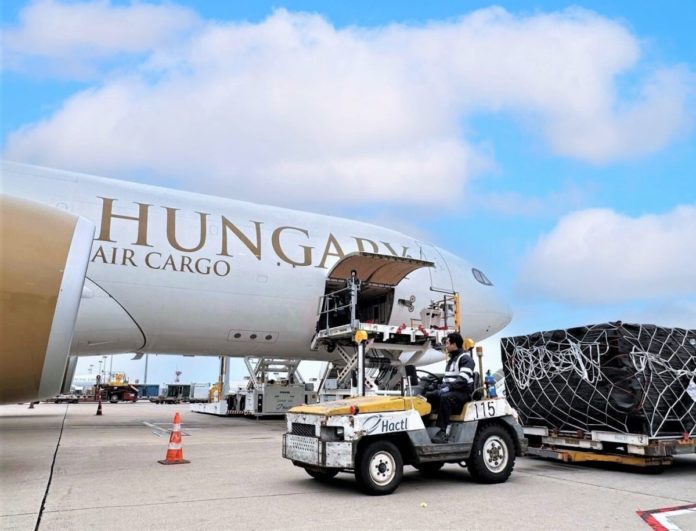
Independent cargo handler Hong Kong Air Cargo Terminals Limited (Hactl) has signed its first carrier of 2025, Hungary Airlines.
The carrier has started scheduled services between its Budapest hub and Hong Kong, using 62 tonne capacity A330F aircraft.
Hactl will provide cargo terminal operations, aircraft loading and unloading, and documentation.
Budapest is a growing e-commerce hub for Eastern Europe. As more aircraft are added to the Hungary Airlines fleet, the carrier plans to add services to the US and Middle East.
Mercedes-Benz places Schenker’s largest green jet fuel order
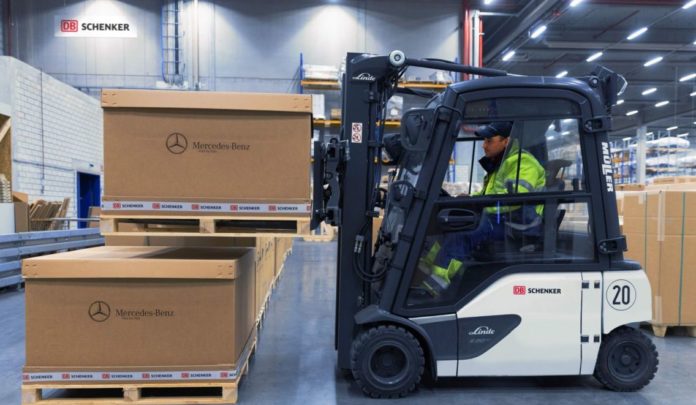
Car maker Mercedes-Benz has place the largest single order for Sustainable Aviation Fuel by a DB Schenker customer. The agreement for 13,000 tons of SAFwill reduce the company’s CO2e emissions by 40,000 tons and will be accredited towards export air freight shipments from Frankfurt to Beijing and Shanghai.
DB Schenker and Mercedes-Benz have partnered for many decadesfor land, air, and ocean transport as well as warehouse management. When DB Schenker launched the world’s first regular cargo flight covered by SAF in 2021, Mercedes-Benz was among the initial customers.
DB Schenker says that while SAF alone cannot fully eliminate emissions from air transport, it is a tangible step in reducing the environmental impact of aviation and a well-tested alternative to conventional jet fuel. Produced from waste materials such as used frying oil, it reduces lifecycle greenhouse gas emissions by an average of 80% compared to fossil fuel.
Global board member for air and ocean freight, Thorsten Meincke, said: “Achieving carbon neutrality is a long-haul journey. Our new biofuel agreement with our trusted partner Mercedes-Benz sets a new benchmark for sustainability commitments. By working together, we are actively and immediately reducing emissions in intercontinental supply chains. This contract represents one of the largest-ever SAF deals in the entire automotive and logistics industries globally. I look forward to seeing more customers join us.”
Mercedes-Benz head of supply chain management, Elke Pusskeiler, added: “As part of our ‘Ambition 2039’ for Mercedes-Benz Cars, we aim to reduce CO2 emissions in logistics by 60% compared to 2021. Our sustainability strategy focuses on CO2 avoidance and on the reduction of emissions for all modes of transport in inbound and outbound. Utilizing Sustainable Aviation Fuel for air freight allows us to cut emissions. Together with DB Schenker, we made another significant achievement in our efforts for sustainable logistics.”
((Pix – SAF))
ACS appoints time critical chief

Air Charter Service has promoted Andreas Spies to head of time critical services for the EMEA and APAC regions, based in Frankfurt, Germany. He joined ACS seven years ago after more than a decade of onboard courier experience and will now further develop the broker’s OBC and Next Flight Out offerings, working in close conjunction with Robert Alleman, who was recently appointed chief executive of time critical services in the Americas, based in Houston.”
CMA CGM to open Chicago freighter hub
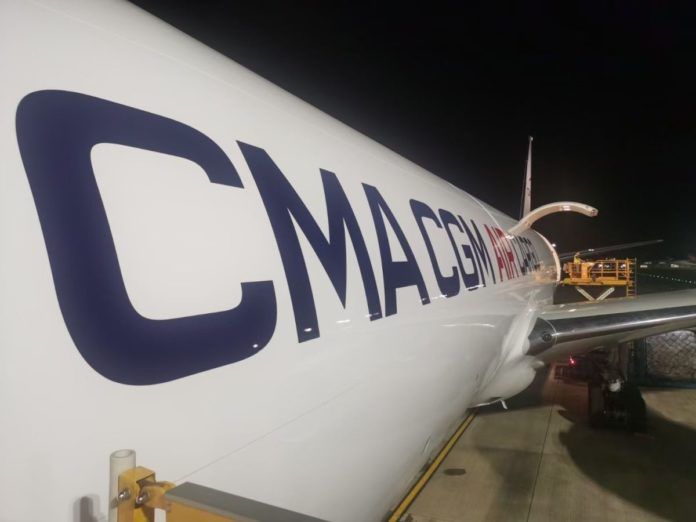
CMA CGM Group is to capacity with a new hub in Chicago, where it will deploy five new Boeing 777 freighters, flown by US pilots. The move is part of a plan by the shipping, airfreight and logistics group to invest $20 billion in its US and Americas network over the next four years.
The group is also investing in its US ports along with warehousing and automotive logistics platforms across the country.
In addition, CMA CGM will open a new logistics research and development hub in Boston, focusing on advanced robotics and automation in collaboration with leading US technology partners.
Celebrating airfreight’s high-fliers

As the world marks Women’s History Month and International Women’s Day in March, Air Cargo Vision asks Eliska Hill, Senior Vice President of Cargo at broker Air Partner about gender in the industry – and how it has changed over the years.
Thirty-five years ago, Eliska Hill wanted to be a pilot. Coming from an aviation family, it was only natural that she would want to follow in her relatives’ footsteps – or should that be wingtips?
Airline selection processes being what they are – many are called but few are chosen – that dream didn’t work out, but she was sufficiently bitten by the aviation bug to take a Transport Management course at Loughborough University in the UK.
Post-university, there came the small matter of finding an aviation job. “I started out in the industry working for MK Airlines, who were operating DC8’s into Africa at the time. I joined MK knowing very little about air cargo and, back in 1996, there were very few women in the industry,” she recalls. “It was a great introduction to the air cargo world – I learned everything from scratch.”
Being the only woman at an air cargo conference could be daunting, but it was an experience that made her stronger, says Hill.
“It’s hard now for those who didn’t experience it to envisage how male dominated air cargo was. Today, of course, things have changed immensely. However it’s still not quite where it should be, but nevertheless, it has evolved.”
Several factors have changed hearts and minds in the industry. One, Hill believes, was digitization. “Airfreight used to be seen as very hard, tough work with a lot of heavy lifting – literally. But that has changed.” Three decades ago, a woman working in the sector was expected to adapt to the then industry norms, “in the way I dressed, the way I spoke – in everything.”
But machines and computers are taking more and more of the strain – physical and mental – and that has opened up more doors for women. Digitization is even removing some of the 24/7 nature of air cargo, which again might make it somewhat more female-friendly, though Hill quickly points out that there are hundreds of women in the industry who do work shifts.
Technologically, the airfreight industry generally still has a great deal of work to do before it can say it has fully caught up with the passenger sector. (Hill herself has spent time outside cargo, in passenger charters, incidentally.)
“Even in 2015, I found that the amount paper involved in the industry was incredible.”
Perhaps because the industry has always been like that, people don’t see the need to change, but the growth of e-commerce with its need for speed and to closely track all consignments will surely change everything forever.
Hill, by the way, doesn’t buy the argument that airfreight is in some way unique or “too complex” to digitize effectively. “However, I think we are getting there slowly, although different regions, and countries are moving at different rates. Air cargo is a global industry, and at the moment we’re just not connected enough.”
Turning to the human aspect: “It’s also important that there are now more female role models at the top of the industry—leaders like Gabriela Hiitola (Senior VP, Finnair Cargo) and Kirsten de Bruijn at WestJet, who are strong role models at the pinnacle of their careers.”
Hill found a welcome shift away from traditional industry standards in a somewhat unexpected place—the Middle East. “I was general manager of Chapman Freeborn in Dubai in 2006 and then joined Emirates SkyCargo in 2015. I think it’s a misconception that Dubai is a male-dominated society. In reality, it is more culturally open than many other places, and there is a strong recognition of women’s contributions. Perhaps it’s because women there often have to work significantly harder to succeed, earning them a high level of respect in the industry.”
There are many other reasons why there are relatively few women in air cargo, some of them what might be termed involuntary rather than active discrimination. One is that the industry does tend to be a relatively closed shop. Once people find a place in it, they tend not to leave it again, and perhaps that militates against diversification of the workforce in many ways.
But really, the debate should not be about whether the freight industry should recruit more women but rather that it should recruit the best people of either gender to do a particular job. “Certainly, I would always recruit whoever was best for the particular role; you need a diverse workforce.” Arguments about whether women are better at multitasking, or that, for women, families and children will always come first are, frankly futile: “You shouldn’t be recruiting on the basis of a stereotype.”
We asked: what is next for women in the industry? “I think we need to do a lot more generally to get people thinking about logistics from an early age, at schools and colleges – there is a lot of work that needs to be done in that respect.”