






Home Blog Page 50

Further and faster: Windracers unveils latest drone design

0

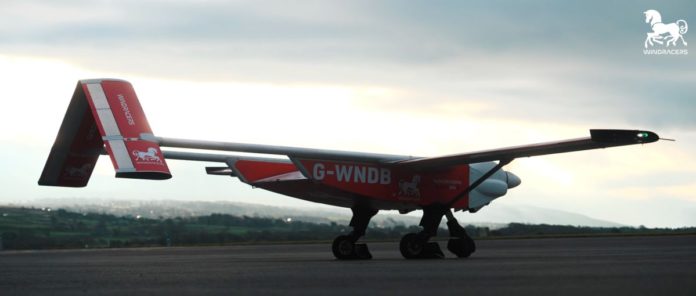
Autonomous cargo drone developer Windracers unveiled its latest ULTRA MK2 in London on 16 January. The consortium, which includes Southampton University and Bristol University, says that the latest version of its range of pilotless aircraft, will offer a range of up to 1,000km (620 miles) with a “meaningful payload” of at least 100 kilos, or 150kg on shorter sectors, 50% more than the Mark 1 Ultra.

Thanks to a new design of engine and careful attention to the wings and airframe, the Ultra Mark II has been designed to offer higher payload at lower cost and Windracers and has been aimed at volume production. Windracers and its manufacturing partners are now hoping to step up production to around one machine a day. Group chief executive Simon Thompson told the conference: “We’re not there yet, but I think we will be soon.”

Windracers hopes that, by offering a higher-performing drone at lower cost it will ‘disrupt’ the market. While its machines have been used to supply bases in the artic and to deliver medicines to remote regions of developing countries, the company also sees a niche in deliveries of regular freight to islands and other hard-to-reach places in the UK.

It has carried Royal Mail traffic to the Scilly Isles on a trial basis as well as to Scottish islands. In 2024, Windracers ran a scheduled service over 90 days in July and August to the Orkneys with Streamline Shipping Group, which handles over 90% of deliveries to the islands.

The machine is powered by twin F23 Hirth 50hp turboprop engines, offering reduced fuel burn. According to Windracers’ spokespeople, the Mark 2 uses about 12 litres (2.6 gallons) of fuel per flying hour and, as its cruising speed is typically 70 knots (77mph), its fuel consumption is on a par with road vehicles, while offering higher speeds and with the ability to fly direct over mountains or stretches of water.

Windracers has opted for conventional e over battery electric, mainly because in many applications in the developing world, electric supplies to recharge batteries are not available. However, it is possible that electric versions will be developed in future. Sustainable Aviation Fuel (SAF) is another possibility.

Windracers can supply drones to be operated by users – who would need to undergo training – or it can provide personal to operate the drones. The Ultra Mk 2 package includes Windracers Mission Control, a route planning and aircraft monitoring system with an intuitive interface that requires minimal training, the company adds.

One issue that has help back wider deployment of drones in the UK has been restrictions on flying over populated areas or out of the operator’s sight. However, the government recently announced a Regulatory Innovation Office to speed up access to new technologies including cargo drones.

Other aviation authorities, including the Federation Aviation Authority in the US, are much more accommodating to drone operators, said a Windracers spokesperson.

Operation in remote areas or over the sea to islands is easier to arrange than in more populated areas, although Windracers works closely with local residents to ensure that people and wildlife are not unduly disturbed by the machines. So far, locals’ reaction where the drones have been deployed has been overwhelmingly positive, as residents of remote islands recognise the benefits of a delivery service unconstrained by scheduled ferry or aircraft operations.


Promotions and appointments at Lufthansa Cargo and Aerologic

0

Lufthansa Cargo has appointed Dr Andre Schulz, previously head of region Middle East, Africa & South Asia & CIS, as head of region Europe. He succeeds Oliver von Götz, who has become head of global fulfillment management.

Dr Schulz will be succeeded by Stephanie Pöhn-Helbig, currently head of crew control at Lufthansa Cargo. Lufthansa Cargo says that over 30% of its management positions are now held by women.

Meanwhile Marcus Niedermeyer has been appointed as second managing director of AeroLogic, Lufthansa Cargo’s joint venture with DHL Express. He will work alongside Josef Moser and will be responsible for Finance, Human Resources, IT and Administration, a position he has held on an interim basis since July 2024, succeeding Katharina Prost, who held the position from October 2022 to July 2024.

Niedermeyer was most recently managing director of Air Mail Center Frankfurt and has held various management positions at Lufthansa Cargo.

Taking temperature protection to the next level

0

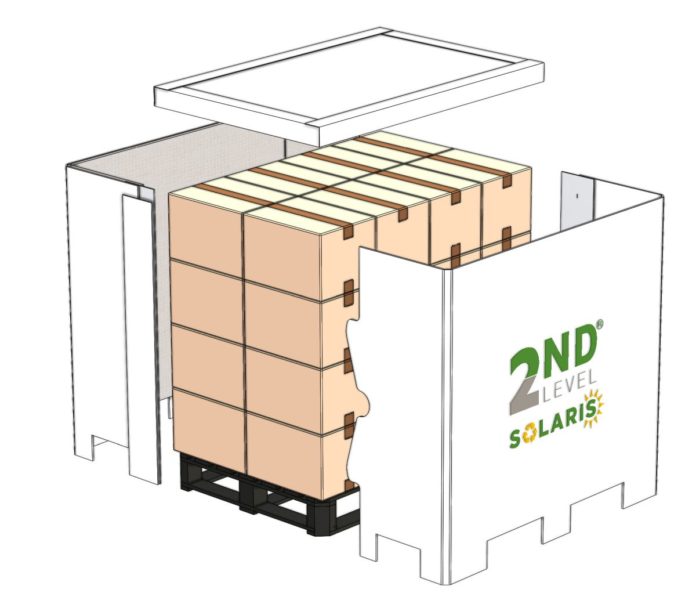
Packaging firm 2nd Level Global Solutions has launched a range of 100% paper, recyclable and water-resistant thermal pallet cover designed to provide robust temperature protection in transit.

Solaris is marketed as an alternative to plastic thermal covers, addressing the growing concern over the environmental impact of waste in the supply chain.

The Solaris range includes four products – Solaris 5, providing up to 7.5 hours of protection at 40°C; Solaris 10: A more robust version with 12 insulation layers, extending temperature protection to 9 hours; Solaris 25: A free-standing cover with 20 insulation layers, extending temperature protection to 10 hours; and: Solaris S20: Made from structural corrugated cardboard and designed to enable loads of up to 500kg stacked on top.

Commercial director, Mark Hammond, said: “Plastic thermal covers, commonly used in global shipping, generate significant waste, with a large proportion ending up in landfills. These covers often fail to be recycled due to the complexity of their composite silver foil and plastic material composition. Solaris, on the other hand, is constructed entirely from paper and is 100% recyclable, providing a greener solution without compromising the integrity of temperature-sensitive cargo.”


DP World Brazil wins IATA status

0

DP World has earned International Air Transport Association certification in Brazil, enabling it to provide domestic and international air freight services.

The supply chain solutions providersaid the certification would enhance its ability to deliver secure, agile and efficient cargo transportation solutions throughout the logistics process.

Securing IATA certification gives DP World direct access to airlines for negotiations, bolstering its specialized support and expertise in air freight operations. This milestone strengthens the company’s commitment to becoming a fully integrated logistics provider, offering comprehensive and high-quality logistics solutions.

Chief executive of DP World Brazil, Fabio Siccherino said: “Along with the expansion of our freight forwarding network in Brazil, which began in 2024, the IATA certification enables us to handle more complex transportation needs, while catering to specific client demands across different sectors.”

In December 2024, DP World said it planned to open six new offices in Brazil by 2026, underscoring its commitment to enhancing end-to-end supply chain solutions across Latin America.

DP World’s freight forwarding operations in Brazil are expected to handle about 75,000 TEUs annually within the next five years, reflecting the company’s ambition to boost its logistics footprint.

In the Americas, DP World operates with a team of more than 16,000 people across 12 countries, through a network of 14 ports and terminals and more than 40 warehouses.

Leased jumbos keep Emirates aloft

0

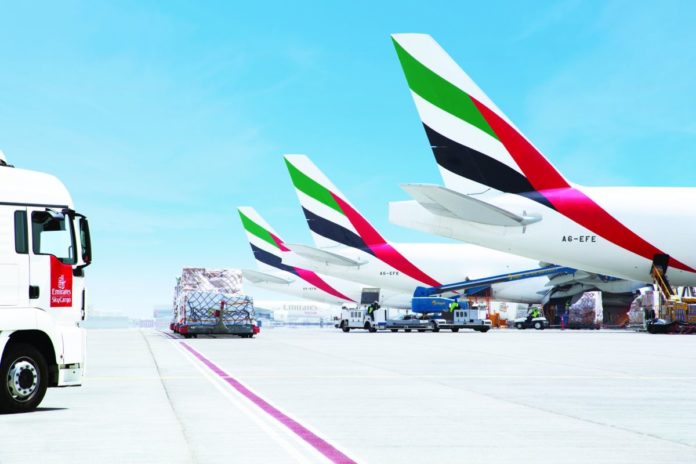
Emirates SkyCargo says it is increasing its cargo capacity by 15% in 2025 to meet demand. The additional capacity includes two wet-leased Boeing 747 freighters from Compass Group, one of Emirates SkyCargo’s, enabling the airline to unlock immediate capacity while the partners discuss avenues for further expansion.

The Dubai-based carrier received two new Boeing 777Fs in 2024 and its active operating fleet now consists of 10 Boeing 777Fs and six wet-leased Boeing 747s. The airline also has 13 Boeing 777Fs on order, with expected delivery between 2025 and 2026 and it is exploring options for the Boeing 777-8F and Airbus A350-1000F.

Cargo boom for Etihad at China freighter hub

0

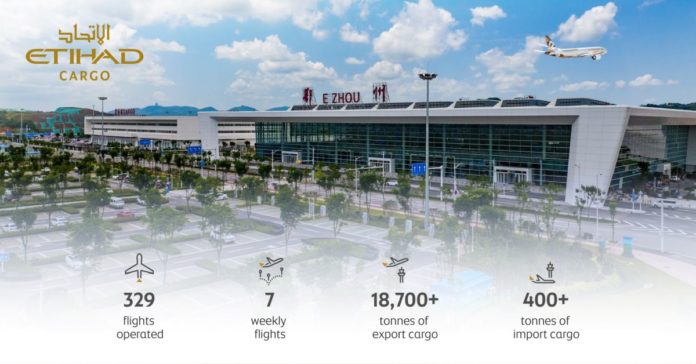
Etihad Cargo has operated 329 flights from Ezhou Huahu Airport near Wuhan in east-central China, billed as Asia’s first dedicated freighter hub, to its Abu Dhabi hub at Zayed International Airport. Etihad’s inaugural flight was in August 2023, making it the first international airline to operate to Ezhou. The carrier says it has moved over 18,700 tonnes of export cargo in partnership with China’s SF Airlines on seven weekly freighter flights with traffic including pharmaceuticals, e-commerce, and perishables. The airport’s ground handling service has recently achieved IATA CEIV Pharma certification.

Ezhou Huahu now offers 36 international cargo routes and its cargo and mail throughput is projected to rank fifth nationwide.

China Southern are kings of the pallet

0

China Southern Airlines was crowned Overall Champion at the 14th Hactl International Forklift and Pallet Building Competition, held at Hactl’s SuperTerminal 1 in Hong Kong on 13 January.

Japan Airlines won the Forklift Competition and Forklift Driving Safety Award, and China Southern Airlines took first place in the Pallet Building Competition.

Teams from 10 international airlines took part in the event, watched by 300 spectators.

It tested the ability of contestants to manoeuvre forklift trucks precisely and safely along complex courses while the Pallet Building contest gave contestants one hour to palletise as much cargo as possible, adhering to the pallets’ designated contours, and complying with IATA standards and other aviation industry best practice. 

Unilode signs ULD-tracking deal with Qatar Airways

0

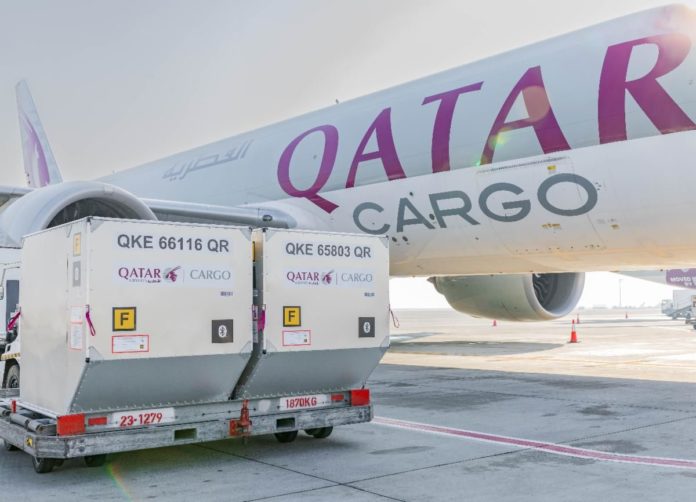
Qatar Airways Cargo has a deal with airfreight unit load device (ULD) manager Unilode to digitalise its fleet of over 42,000 pieces of equipment. Under the largest ULD digitalisation programme ever undertaken by an airline, Qatar Airways will use Unilode’s capabilities to gain data-driven insights and real-time visibility into locations, sensory data, and utilisation rates. It will also extend Unilode’s tag and reader network to cover its entire global network, supported by E-ULD, Unilode’s mobile app and web portal for visibility and tracking.

Pharma Logistics School’s in for Winter, Logipharma agenda

0

The inaugural Pharma Logistics Winter University, co-founded by Etihad Cargo, Pharma.Aero, Abu Dhabi Department of Health, the University of Antwerp, and Khalifa University of Science and Technology will be held from 3-7 February, hosted by Khalifa University.

It offers an immersive five-day programme, bridging academic learning with practical application to cultivate future global leaders in pharmaceutical logistics. The initiative aims to cultivate future global leaders in pharmaceutical logistics through a comprehensive and immersive five-day programme tailored for regional and international students, management trainees and junior professionals.

The Winter University builds on the success of the 2022 edition of the Pharma Logistics Masterclass, also held in Abu Dhabi. While the Masterclass focuses on specialised industry-level knowledge and senior professionals, the Pharma Logistics Winter University will a platform for developing young talent, students and management trainees in pharmaceutical logistics.

Participants will earn 3 European Credit Transfers (ECTs) and a micro-credential certificate upon successfully completing the programme.

Participants must register by 15 January to secure their place: https://pharma.aero/pharma-logistics-winter-university/

Meanwhile, the Logipharma event which takes place in Lyon, France on 8-10 April has published its agenda. The conference, which also incorporates the medical device supply chain event, LogiMed, is set to welcome 2,500 delegates from across the pharmaceutical and life sciences logistics sector. Download Agenda | LogiPharma

A flying start to 2025 but will airfreight come back down to earth?

0

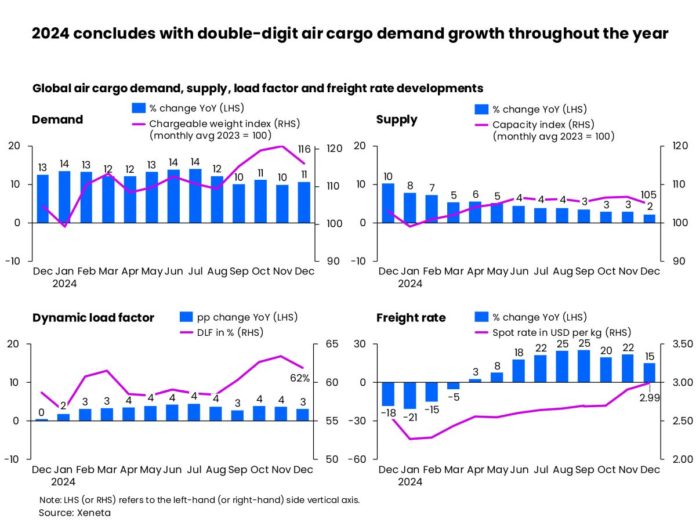
The global air cargo market cruised into 2025 on the back of 14 consecutive months of double-digit growth in demand as volumes climbed +11% year-on-year in December and average spot rates finished the year +15% higher, said industry analysts Xeneta.

While Xeneta is forecasting demand growth of +4-6% in 2025, chief airfreight officer, Niall van de Wouw says “cautious optimism remains tempered by susceptibility to geopolitical tensions, a subdued manufacturing outlook, and political interventions in an increasingly volatile world”.

With capacity supply growth of just +2% in December continuing to lag well behind resilient demand, Xeneta’s dynamic load factor rose 3 percentage points year-on-year to 62%.

In line with this, the December global air cargo spot rate increased +15% year-on-year to US$2.99 per kg, although the comparison with the high-rate level in December 2023 made this the slowest growth rate in the last seven months.

As projected in Xeneta’s previous monthly analyses, the 2024 year-end peak season concluded with a more moderate spot rate increase of +11% between September and December. This contrasts sharply with the corresponding period of 2023, which surprised many with a much steeper +21% surge in spot rates.

“This rebalancing of the air cargo market from the extreme volatilities seen in 2023 is a clear reflection of the preparedness and maturity seen across the market in 2024. The efforts made by industry stakeholders ranging from strategic capacity allocation by airlines, securing capacity ahead of ‘hot’ e-commerce corridors by freight forwarders, and locking-in longer-term contracts by shippers, all contributed to a healthier industry based on longer-term relationships instead of a push for short-term gains,” van de Wouw added.

Increasing reliance on e-commerce

Van de Wouw also outlined the continuing impact e-commerce will have on air freight in 2025. He said: “We can put a ribbon around 2024. It was quite some year for air cargo. But this remains a market that is increasingly reliant on e-commerce volumes, while the general freight market, the bellwether of the global economy, remains muted. The signals from the manufacturing industry, particularly in Europe, are concerning but e-commerce continues to take up this slack and is projected to grow at +14% annually to 2026.

“So, the overall outlook for air cargo remains one of growth. But reports of countries aiming to crack down on the Chinese e-commerce platforms, for example, would have a sizeable impact in markets around the world. What’s going to take the place of these volumes?”

Zooming in on major corridors, December saw the Europe-to-North America air spot rate experience the most significant month-on-month increase, rising +21% to $3.27 per kg, its highest level in over two years. This spike is likely due to reduced cargo capacity from airline winter schedules on passenger flights and the reallocation of freighter capacity to Asia.

Concerns about potential second-round strikes at US East Coast ports failed to produce a meaningful mode shift to air freight in December and news on 8 January 2025 of a tentative agreement between the International Longshoremen’s Association (ILA) and United States Maritime Alliance (USMX) for a new six-year Master Contract means any further boost to air cargo volumes as a result of East Coast ports disruption is now far less likely.

In early January, Europe to the US spot rates stood at $2.56 per kg, a -25% drop from their peak two weeks earlier.

By comparison, the Northeast Asia-to-North America corridor saw a more modest increase of +5% month-on-month in December, reaching $5.57 per kg. Close behind, the Northeast Asia-to-Europe market posted a +4% rise, bringing rates to $5.28 per kg.

On the increasingly scrutinized China-to-US corridor, the spot rate, unlike other key lanes, failed to reach 2023’s peak season highs and showed a decline of -9% from its mid-December 2024 peak of $5.61 per kg to early January 2025. This contrasted sharply with the same period in 2023, when rates dropped nearly -40% from a peak of $5.91 per kg. A combination of strategic allocation of cargo capacity and tightened scrutiny on e-commerce activities may have contributed to subdued peak season levels, while concerns over potential Trump tariffs likely tempered the rate decline due to increased frontloading.

Demand growth 4-6% in 2025

Looking ahead, Xeneta projects 2025 global air cargo demand to grow +4-6% year-on-year, continuing to outpace global cargo capacity supply growth of +3-4%.

The continued geopolitical tensions, threats of Trump tariffs, tightened measures of de minimis threshold related to e-commerce, increased security risks from rising global tension. and extreme weather and natural disasters pose many uncertainties for this year’s global air cargo demand and supply chain.

While the threat of further US East Coast port strikes seems to have now been removed, any further disruptions to global ocean freight is likely to see shippers resorting to the predictability of air freight for urgent shipments, triggering further spikes in air cargo rates. October’s three-day strike at US ports produced a +12% jump in air cargo volumes month-on-month from Europe to the US.

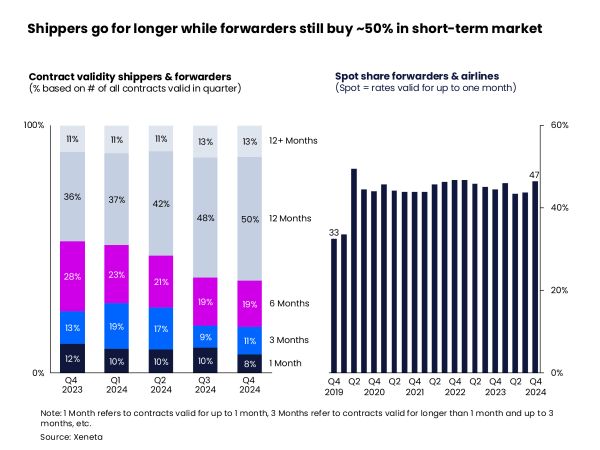
Inevitably, the upcoming air freight tender season for the new year is set to be challenging. Historical trends indicate that, in 2024, shippers demonstrated a growing preference for longer-term air freight contracts, of one year or more. These contracts accounted for 63% of all agreements valid in Q4 2024, marking a 16-percentage point increase compared to the same period in 2023. Meanwhile, during this timeframe, freight forwarders continued to negotiate nearly half of their volumes in the spot market, a strategy that likely has eroded their revenues due to rising airline selling rates.

Van de Wouw said: “The lesson these market conditions are forcing all stakeholders to learn is that they cannot rely solely on historical trends as a foundation for purchasing decisions. Heightened market volatility due to rising global uncertainties will continue to impact air cargo demand and this could force air freight rates to fluctuate significantly. Therefore, embracing more flexible freight rate negotiation methods, such as indexing or transparent pricing, could foster mutual understanding and better collaboration across the industry this year.

“Without this insight, what lies ahead for air cargo in 2025 may remain a guessing game for many less informed market players. Will January 2025 be the first time in 14 months we won’t see double digit growth? At the start of last year, the answer would most likely have been affirmative, but now the market must wait and see what happens because this year is starting off with a much higher base.