







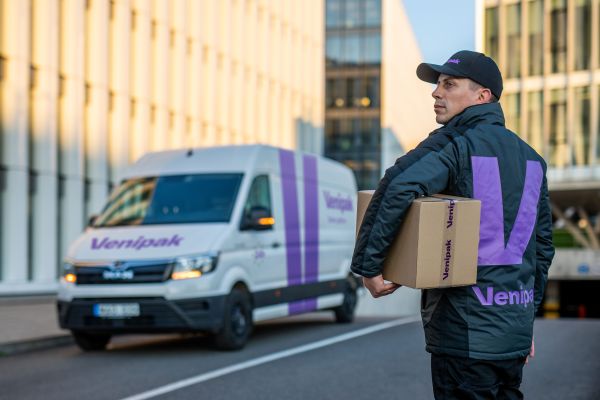
Baltic courier company Venipak, which recently launched its own freighter aircraft between Hong Kong and Riga, has also created a new visual identity, Marketing manager Asta Raudonienė, says it reflects the company’s strategic international growth which includes an expanding parcel locker network in the Baltics and a self-service platform, as well as the new air freighter operation. The company also has ambitions to launche freighter services to the US.
DSV opens Africa’s largest logistics hub

DSV has inaugurated its Gauteng HQ in South Africa, Africa’s largest integrated logistics centre. DSV Park Gauteng is situated near OR Tambo International Airport between Johannesburg and Pretoria and with easy access to the East and West Rand. The logistics centre consists of 130,000sq m of buildings and covers supply chain solutions from first to last mile controlled and managed under one roof.
The sprawling complex includes a logistics warehouse of 79,000sq m, a cross-dock facility of 41,000sq m² and office space. DSV’s Air & Sea, Road, Solutions and Shared Services divisions function will locate at the new centre while other specific units such as Healthcare and parts of Mounties and Solutions will continue out of their current specialised facilities.
Executive vice-president and head of group property, Brian Almind Winther, said: “With DSV Park Gauteng, DSV has developed a large-scale modern logistics centre which captures the essence of our consolidation strategy to create larger and more efficient facilities, enabling us to have many of our business units together under one single roof.
“We have packed the new DSV facility with solutions such as an innovative sorter that can handle 13,000 packages every single hour. Throughout the whole building process, we have also utilised our global experience to construct buildings where sustainability and resource optimisation have been fundamental in all processes.”
DSV worked closely with contractors and the local community to ensure they were included in the development of DSV Park Gauteng. The company partnered with accredited training service providers to provide various skills training courses to 117 candidates.
DSV is also building a consolidated logistics centre in the Western Cape. DSV Park Cape Town will be near the international airport, and close to the port and industrial and commercial hubs.
ATC extends Kuwait Airways coverage in Europe
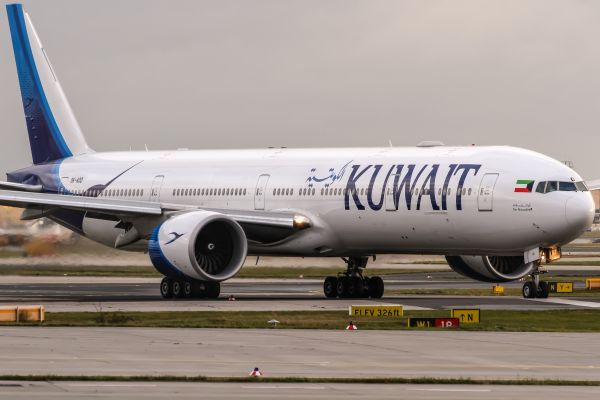
ATC Aviation is to represent Kuwait Airways as Cargo general sales and service agent (GSSA) in the Czech Republic, Germany, Hungary, Poland, Switzerland and Slovenia, building on its long-lasting successful partnership in Austria and the Netherlands.
ATC will be responsible for all cargo sales in these countries. The national carrier of the State of Kuwait operates scheduled flights from Kuwait to the Middle and Far East, Indian subcontinent as well as Europe and North America with a current fleet of 30 aircraft.
ATC Aviation chief executive Ingo Zimmer, said: “The fact that a single partner covers a bigger number of territories will ease communication and create synergies to fill capacities in both directions. Furthermore, for Europe a centralized capacity control optimizes the space utilization and revenue management.”
Kuwait Airways said the agreement with ATC Aviation Services enables would allow it to further enhance and expand its cargo services as well as maintain its reputation for quality.
CargoAi moves into rates management
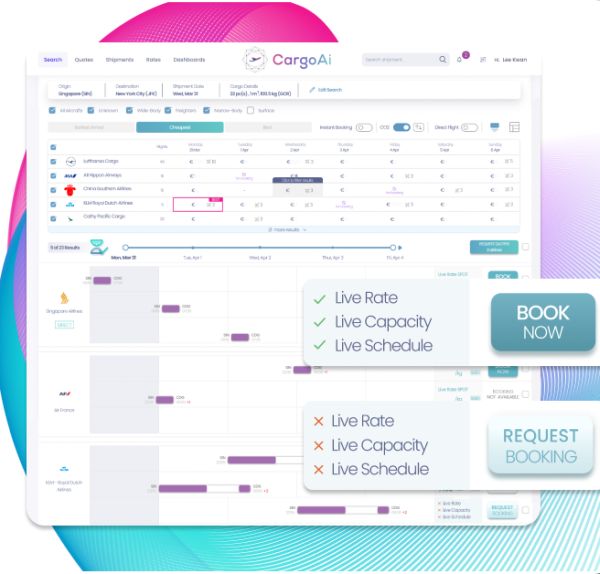
Users of www.CargoAi can now view and manage all cargo rates directly while an integrated Booking allows freight forwarders to make an e-booking request directly via the platform to all airlines.
Detailed cargo capacity booking requests with flight, dimensions and rates are sent to any airline or GSA via a standardised e-mail (or FFR in booking systems). For airlines and GSAs who don’t have an eBooking API available, this allows them to still achieve e-Bookings, saving time and cost.
Launched in 2019 by its founder and chief executive, Matthieu Petot, CargoAi is a software as a service application offering air cargo digital solutions to freight forwarders, airlines and GSAs.
He said: “Like all the features we are launching, Rate Management with the integrated Booking Request option is a further step towards the digitalisation of the entire air cargo distribution and procurement process. We developed it following feedback from users of www.CargoAi.co, who are seeking services which have a direct impact on their bottom line, while having a much better visibility and ability to manage their booking requests. Airlines and GSAs can still modify, confirm or reject a booking.”
All airlines’ schedules including cargo capacity are displayed in the application. Freight forwarders can check the flight schedules and compare rates. CargoAi offers a range of levels of integration for airlines, from APIs to emails.
Forwarders can request quotes and make bookings via the platform. The application allows airlines and GSAs to manage all quote and booking requests in one place. The tool also provides customers with data and analytics including 3D viewing of the shipment and capacity forecasts.
IAG Cargo strengthens customer team
IAG Cargo has promoted Pat Dobie from chief transformation officer to chief customer and infrastructure officer while George Efkolodis joins the business as head of customer experience.
Both appointees will focus on the end-to-end customer experience as the business continues to increase capacity on its network whilst offering cargo-only services and its charter product. The IAG group includes British Airways, Iberia and Aer Lingus toghther with low-cost carriers LEVEL and Vueling.
Pat Dobie has been with IAG Cargo since 2017 and brings over 30 years’ experience in the logistics and aviation sector. George Efkolodis has over 20 years’ experience in aviation, having held senior roles at Munich Airport International, Heathrow and IATA.
Pat Dobie commented: “The past year has been an eventful one for IAG Cargo, with many highlights. We celebrated our 10-year anniversary, transported more than 20,000 tonnes of PPE, delivered COVID-19 vaccines and created a new charter product – incredibly popular with our customers. Throughout the pandemic we have adapted for our customers as their needs evolved.”
George Efkolodis said his appointment “comes at an exciting and crucial time for the business…Our continued success depends on our customers and ensuring they get the most of out of IAG Cargo.”
United to fly Washington-Lagos

United Airlines will introduce a service between Washington DC and Lagos, Nigeria’s largest city and commercial capital from November 29, subject to government approval. It will be operated by Boeing 787 Dreamliners three times a week, departing Washington on Monday, Thursday and Saturday and returning from Lagos on Tuesday, Friday and Sunday.
According to Routes Online, United served Lagos from Houston until June 2016 but suspended the route due to lack of profitability. Since then, Delta Air Lines has been the sole US carrier to operate nonstop between the US and Nigeria, currently flying daily to Lagos fron Atlanta and three time weekly from New York JFK, although, there are no flights listed on the latter route beyond the end of September, according to schedules filed with OAG.
Higher costs hit FedEx profits
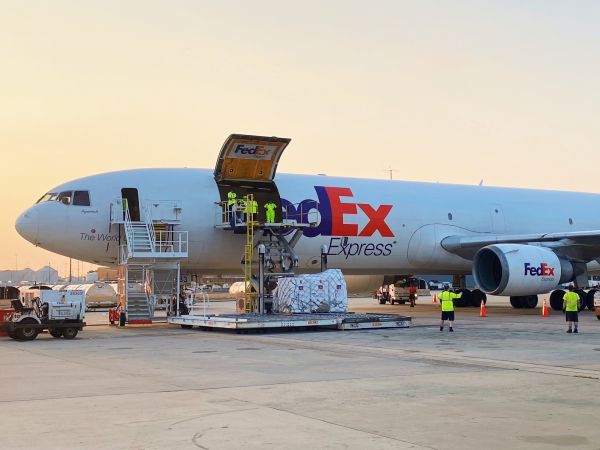
FedEx Corporation said its operating results for the first quarter ended August 31 were negatively affected by an estimated $450 million year over year increase in costs due to a constrained labor market and availability, despite an increase in revenue from $19.3 billion to $22bn. The higher costs were only partially offset by higher package and freight yields, increased international export express shipments and lower net fuel prices.
In addition, while commercial ground and US domestic express package volume increased year over year, continued supply chain disruptions have slowed domestic parcel demand compared to the company’s earlier forecast.
Chairman and chief executive officer Frederick W. Smith, said: “While we expect these conditions to continue near-term, we expect a gradual improvement in labor availability combined with our proactive revenue management actions to mitigate the ongoing impact of these headwinds on our results and position us for earnings growth in fiscal 2022.”
“The execution of our strategies continues to drive higher demand for our services, despite the disruptive impact of the pandemic to labor availability and global supply chains,” he added. “I am very proud of our team members around the world who continue to transport lifesaving vaccines and deliver urgently needed supplies to those affected by natural disasters like Hurricane Ida and the recent earthquakes.”
FedEx Freight first quarter operating results improved primarily due to the continued focus on revenue quality and cost management. FedEx Freight reported a record operating margin of 17.3% for the quarter, with average daily shipments growing 12% and revenue per shipment increasing 11%.
“The FedEx teams continue to diligently deliver for our customers under unique and challenging circumstances,” said president and chief operating officer, Raj Subramaniam. “The current labor environment is driving inefficiencies in the operation of our networks and significantly impacting our financial results. For the peak season ahead, service remains our focus and we are making investments in resources and capacity to meet our customer’s needs.”
FedEx Express, FedEx Ground and FedEx Home Delivery shipping rates will increase by an average of 5.9%, while FedEx Freight rates will increase by an average of 5.9% to 7.9% and, from November 1, 2021, a fuel surcharge will be applied to FedEx Express (U.S. domestic package and freight services), FedEx Ground and FedEx Freight shipments.
The company is reducing its earnings outlook to reflect first quarter results, which were lower than the company’s June forecast. As conditions during the first quarter were more challenging than anticipated and are now expected to extend longer, the revised outlook for the remainder of the fiscal year also reflects this.
FedEx has incurred and expects to incur significant expenses through fiscal 2022 from theintegration of TNT Express but does not expect to incur these as part of its continuing operations. These include professional and legal fees and other operating expenses.
Freight visibility firm adds parcels expertise

Supply chain visibility specialist project44 has acquired Austin, Texas-based delivery experience management firm Convey, for £255 million. Project44 says the move extends its service to the last-mile sector, including parcel, and courier delivery, as well as return items.
The two companies say they can radically change the way companies view, learn, and react to downstream changes, such as shipping delays, or Covid-related worker shortages and port closures and the demand for total order visibility and the ability to get ahead of issues before they occur has never been greater.
Convey adds the ability to resolve parcel delivery issues through automated customer communication, allowing carriers and logistics service providers to spend less time working manually and more time focused on their core business.
Danish gateway signs Champ

Billund Airport in Denmark has signed up for Champ’s Cargospot Handling digital solution, moving away from a long-term provider. The solution will be used by its handling agent, Cargo Center Billund (CCB) as a step towards paperless handling of over100 airlines and 50 international forwarding companies.
Champ says that CCB can now take advantage of a range of devices, and reduce the inefficiency of using non-native operation systems. All data collected on the warehouse floor is now fed directly into its cargo management application.
The airport’s vice president of airfreight Jan Ditlevsen, said: “We and CCB are excited to offer a more seamless and streamlined experience for our customers through Billund Airport. We are thrilled to be using the latest technologies with Cargospot Handling and Mobile, which will accelerate the cargo processed through our warehouses and throughout the region.”
Director of global sales and account management at Champ Cargosystems, David Linford, added: “Our Cargospot Mobile solution offers ground handlers the ability to efficiently manage their cargo movement using commodity handset devices and real-time data synchronization to the Cargospot
Billund Airport in South Denmark is perhaps best known as the gateway to the Legoland theme park but is also the second largest airport in Denmark, handling over 74.000 tonnes of airfreight a year and 50 freighter flights operations per week, plus road feeders.
Shell sets out plan for 2 million tonnes of sustainable aviation fuel

Global energy firm Shell says it wants to produce around 2 million tonnes of sustainable aviation fuel (SAF) a year by 2025 and have at least 10% of its global aviation fuels sales as SAF by 2030.
Two reports – Decarbonising Aviation: Cleared for Take-Off jointly produced by Shell and Deloitte and Decarbonising Aviation: Shell’s Flight Path – say that the industry needs more ambition to decarbonise. Aviation has often been considered a sector that will decarbonise later than others, but more ambitious efforts are required and investments must start sooner if SAF is to be adopted on a large scale within 15 years.
Choosing SAF as the primary means of decarbonisation has the advantage of avoiding the need to redesign aircraft or airport infrastructure. The uptake of certified carbon offsets must significantly increase in the short term, so they can play as full a role as possible in the early stages of decarbonisation.
When used neat SAF can cut life-cycle emissions from aviation by up to 80% and can be used immediately as a drop-in fuel, blended with conventional jet fuel.
In parallel, says Shell, there is a need to invest in less mature technologies like electric and hydrogen-powered aircraft, and for these to play a role in short-haul flights before 2050.
Launching the report, Shell Aviation president Anna Mascolo, pointed out that SAF currently accounts for less than 0.1% of the world’s use of aviation fuel. However; “With the right policies, investments and collaboration across the sector we can accelerate aviation’s progress towards net zero by 2050.”
Shell has already announced that it is investing in a new biofuels plant at its Rotterdam Energy and Chemicals Park. It currently offers SAF made by other companies.
It also offers certified nature-based carbon credits to offset emissions, and is exploring other ways to help aviation get to net zero, including hydrogen power.
Shell believes a comprehensive regulatory regime is needed to drive infrastructure development, new technologies and SAF production plants and is calling for ambitious and feasible SAF blending mandates.
www.shell.com/DecarbonisingAviation
Hong Kong carrier Cathay Pacific has pledged to use Sustainable Aviation Fuel (SAF) for 10% of its total fuel consumption by 2030. The airline says it has made pioneering efforts in supporting SAF development for more than a decade and, in 2014, was the first airline investor in Fulcrum BioEnergy, from which the airline has already committed to purchasing 1.1 million tonnes of SAF over 10 years, which will cover around 2% of its annual pre-Covid fuel requirements on an annual basis. Cathay Pacific expects to begin taking delivery of SAF produced by Fulcrum and using it on a wider basis for its flights departing the US from 2024 onwards, when Fulcrum can scale up its production.