






24.9 C
New York
Wednesday, December 24, 2025
Home Blog Page 101

Airfreight shippers have the upper hand, says analyst

0

Shippers will hold the upper hand in the winter round of airfreight rates negotiations, says analyst CLIVE Data Services.

Clive, part of Xeneta, said that after another month of falling demand in July saw volumes drop -2% month-over-month, and the general global air freight spot rate decline at a hastening pace of 40% or more for a fourth consecutive month.

Last month saw global air cargo capacity recover by +7% compared to a year ago, as airlines’ summer schedules stepped up to meet heightened passenger traffic. In line with this, the July global average dynamic load factor, which measures cargo load factor based on both volume and weight perspectives of cargo flown and capacity available, was at 55%, on a par with June 2023 but -3% pts below a year ago.

More capacity at a time of falling volumes placed added pressure on airfreight rates. The -41% drop in July versus the same month in 2022, pushed the average air cargo spot rate down to USD 2.20 per kg. This compares to a rate of USD 2.31 per kg recorded in June.

“The month of July rarely provides any surprises in terms of unexpected performance levels in the global air cargo market, but what will be concerning airlines and forwarders is the constant month-on-month decline in average rates, and the quickening pace of this fall since the turn of the year,” says Niall van de Wouw, chief airfreight officer at Xeneta.

“Going into the usually critical winter rates negotiation period, it’s clear shippers will have the upper hand. We are already seeing more shippers relaunching contract negotiations with their logistics service providers to push down airfreight rates. Shippers are also looking to agree longer, 12-month commitments to reduce their costs. Airlines will know they can expect the same pricing turbulence from forwarders.

“The airfreight rates merry-go-round will be intense this winter, as we have indicated in previous months’ analyses. Many freight forwarders, who at the peak of the pandemic chose multi-year contracts to secure airline capacity, are now reportedly bleeding cash, so they are under significant pressure to renegotiate rates which reflect the reality of today’s freight market and the expectation that the current market environment could continue for the foreseeable future into 2024.”

He added that they key question wass: ‘how low will it go?’

Looking at weekly developments in July, the global air cargo spot rate bottomed out in the second week of the month, while in the final week, ending on 30 July, it ticked up 3%, possibly reflecting an easing decline in cargo volumes and slower paced growth in capacity versus previous months.

In addition, the recent rise in jet fuel prices might also have contributed to the increase, having already been seen in some shippers’ monthly rate revisions. But the uptick in jet fuel surcharge will likely not stick and provide any meaningful impact on freight rates, as demand and supply dynamics for the general air freight market remain unchanged. With shippers enjoying leveraging their enhanced buying power after the pricing pain of the pandemic, Xeneta expects a push back on the fuel surcharge adjustments, too.

Northeast Asia (including China) trade lanes registered the biggest rate declines compared to last year. Both China to the US and US to China airfreight spot rates fell by over 60% from a year ago. China to Europe and Europe to China took the third and fourth places, with spot rates down over 55% year-on-year.

South America to the US and Europe to the Middle East and Central Asia registered the smallest rate declines of 19% and 27% respectively, compared to a year ago.

The volatile market conditions are being reflected in the Q2 performance levels being reported by airlines and global forwarders, with the ‘top 3’ airfreight forwarders – Kuehne+Nagel, DHL Global Forwarding, and DSV – all registering contraction of around 50% in their Q2 2023 air revenues compared to the same period a year ago.

While forwarders are clearly suffering from the significant drop in general airfreight volumes, those targeting higher yielding clients and commodities are still gaining higher margins, despite also seeing a drop in volumes. This is generating some recourse to the high competition in the general cargo market, where high competition means the spot rate (valid for up to one month) has fallen below the seasonal rate (valid for over one month) since May last year. In comparison, cargo requiring special handling continues to produce higher yield, with the spot rate above the seasonal rate since the onset of the pandemic.

Those forwarders focused on grabbing volumes almost at any cost to increase their market share will continue to sacrifice their margins to do so, and likely continue to fuel an irrational air cargo market in which global spot freight rates fall deeper the level market fundamentals and conditions would typically expect.

For the remainder of this summer, Xeneta anticipates airfreight volumes will remain muted. This is indicated in the latest manufacturing Purchasing Manager Index (PMI) from China, which ticked up to 49.3 in July from 49.0 in June, indicating a continuing decline in the country’s manufacturing, and extending this fall in production to a fourth consecutive month. Its subindex for new export orders, a bellwether for air cargo demand, dropped to 46.3 in July from 46.4 in June.

Two new recruits for Sterling squad

0

Airfreight trucker Sterling Transportation has appointed Steve Tucker as chief technology officer and Ken Meek as vice president of network operations. Steve Tucker (main picture) has worked for organizations including Texas Instruments, American Airlines/Sabre, and Forward Air. US Navy veteran Ken Meek (pictured below) started his transportation career with American Freightways and was most recently director of operations with American Linehaul.

Etihad hits the spot, adds Boston

0

Etihad Cargo says it has continued to surpass operational performance targets, achieving improvements across key performance measures in the first half of 2023.

It achieved 82.7% on-time performance for freighter departures and 82% OTP for freighter arrivals, above its 80% target. It also improved the carrier’s delivered-as-promised (DAP) rate, achieving 90.6%, ahead of its 85% target and an increase on its 2022 DAP rate of 86.6%.

The carrier also announced that it will introduce flights to Boston from summer 2024. Hey will operate four days a week using Boeing 787-9 aircraft. Etihad already serves Chicago O’Hare, New York JFK, Washington Dulles and Toronto.

Envirotainer to merge with va-Q-tec

0

Pharmaceutical logistics specialist Envirotainer and thermal insulation company va-Q-tec have gained approval from the Austrian and German competition authorities for a merger.

Envirotainer said va-Q-tec’s offering of advanced passive boxes and containers that maintain temperatures from -180°C to +20°C without external energy input would be a perfect match for its own solutions, which include active Unit Load Device (ULD) Containers, (using battery powered compressor cooling and electric heating technology) and the CryoSure -70°C dry ice shipping solution.

Preparations for the integration have already started, and the full combination is expected to be in place during the second half of 2024.

Va-Q-tec’s non-pharma operations, providing cold chain for food, and vacuum insulation, will continue to operate separately.

Pledge cracks Canada carbon conundrum for Synergie

0

Climate-tech company Pledge is rolling out its carbon emissions measurement, reporting, and offsetting solutions to Canadian freight forwarder, Synergie Canada.

Synergie Canada will use the platform to provide customers with simple, transparent, and traceable carbon emissions measurement and reporting., giving them actionable data on their footprint.

Trade Lane Director at Synergie Canada, Marie-Christine Gaudreault (main picture), said: “As a Canadian company, finding a good platform for carbon footprint management has been a real challenge. We looked at many platforms, and Pledge was the only one that met all our needs.”

Pledge chief executive, David de Picciotto (pictured below), added: “Synergie’s commitment to providing environmental stewardship and responsibility shows it’s not afraid to take the necessary steps to create change in the industry.”

Danx to pioneer electric cargo planes

0

Danish-based critical logistics company Danx Carousel Group has signed a strategic partnership with Electron Aerospace to develop an electric, pilotless cargo aircraft.

The Electron 5 has been designed to transport 0.5 tonnes (1,100lbs) of cargo 500km (310 miles)  on a single battery charge and at a speed of up to 300km per hour (186mph). With its requirement for relatively short runways, it will also have access to five times more European airports compared to larger freight aircraft, bypassing congested main hubs

The plane is due to go into operation in 2027 and Carousel aims to add them to its fleet within the next five years.

Danx Carousel’s group chief solutions officer, Lars Ryssel,  said: “Sustainability is, of course, the driving force behind our investment in Electron, but the inclusion of the Electron 5 aircraft in our operations will also bring about impressive operational improvements.

“The ability to launch and land closer to our pick-up and delivery points will cut down on journey lengths, allowing us to offer customers later cut-off times and better serve hard-to-reach areas. Moving away from the traditional hub-and-spoke distribution of air cargo to a point-to-point model means we can avoid congestion at busy airports.

“Based on our analysis, we believe that small planes are set to outperform conventional aircraft fuelled by sustainable aviation fuel (SAF), and hybrid aircraft in cost per kilogram, transit time, and carbon emissions.”

Electron Aerospace co-founder Marc-Henry de Jong, added: “The Electron 5 is well equipped to transport a wide range of cargo, including loose goods like e-commerce parcels and odd-size goods on EU pallets.

Danx Carousel specialists were involved in the freighter design of the Electron 5 model, advising on how to best adapt the aircraft to transport freight.

A Quantum leap for Amerijet efficiency

0

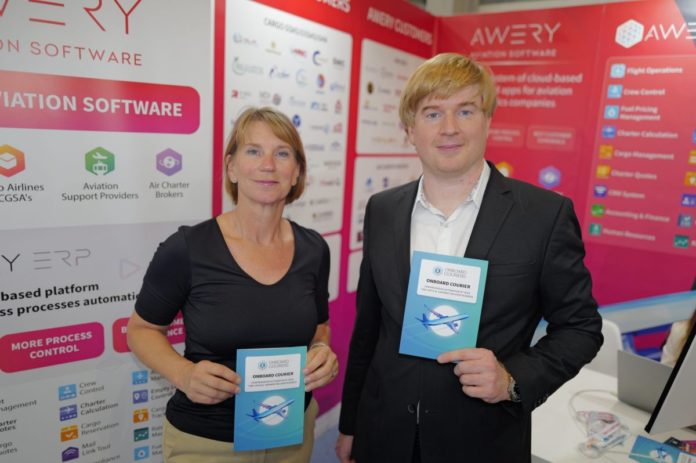
Miami-based freighter aircraft operator Amerijet International has completed a joint proof of concept project with logistics technology firm Quantum-South on technology to optimise aircraft loading and increase revenue per flight.

Amerijet operates a fleet of Boeing 757 and 767 freighter aircraft from Miami to 48 destinations across the Caribbean, Mexico, Central and South America and Europe.

Quantum-South’s solution features an Aircraft Load Optimization module, designed to optimize container placement to maximize transported weight, volume, priority mix, or revenue mix, with a focus on center of gravity optimization. An Air Cargo Bin Packing modulealso  selects shipments for each flight to optimize the booked priority, with container assignment and precise instructions on how to build the container, such as the location and order of placement for each piece in the shipment.

Quantum-South’s solution has been integrated with Amerijet’s cargo management system, powered by the SmartKargo backend application.

As part of the project, Quantum-South examined data from 451 flights and identified loading alternatives that increased payload by up to 30% and volume by up to 76%, for instance, replacing a previous load plan consisting of containers such as PAGs and PQAs with an optimized plan utilizing a variety of containers like AKEs, TYPE A-1, TYPE A FRONT, and TYPE A AFT units.

Amerijet International chief commercial officer Eric Wilson, stated: “This substantial enhancement in cargo load factor can greatly enhance revenue per flight and increase opportunities for customers through more efficient use of capacity.”

Quantum-South co-founder and president, Dr Rafael Sotelo, added: “The project’s success at Miami International Airport demonstrates the significant potential of our cutting-edge solution in optimizing cargo load factors.”

Quantum would continue working with Amerijet to uncover more optimization opportunities and further enhance operations, he said.

Amerijet International said it was committed to tackling challenges related to data structure and data quality while continuing to work on multi-piece shipment ordering and shipment handling code incompatibility restriction compliance. It also plans to explore automated planning of areas such as oversize cargo, consolidated cargo, bulk cargo space, and B757 configurations.

Wilson concluded: “Optimizing flight load plans and augmenting process efficiency helps us provide the best capacity offering to our customers while maximizing the load of every flight. Quantum-South’s solution has the potential to bring significant benefits to our operations, increase revenues and reduce emissions, and we look forward to further collaboration to uncover more optimization opportunities.”

New British carrier is One of a kind

0

New British all-cargo airline, One Air, has completed its inaugural Boeing 747-400 freighter flight, a full charter from China to the UK.

The 100-tonne payload arrived at London Heathrow from Jinan-Shandong on the night of 24 July.

Chief Operating Officer Chris Hope said that, as well as ad hoc charter flights, the carrier was also starting a regular flying programme from Asia Pacific to Europe with two 747F flights per week.

He added: “Work is also under way to add a second 747F to our fleet, which we hope will enter service in early Q4.”  

One Air anticipates regular demand for flights from the UK to Europe, the Middle East, and Asia regions, with services to China and the US to follow.

Chief executive Paul Bennett said: “It is a proud day for us to operate our first customer flight and marks the start of our strategic development plan to build One Air’s reputation with clients in prime air cargo markets around the world.”

One Air is the only UK operator of the Boeing 747 with its dry leased B747-400SF and has established a team of over 100 at its headquarters near London Heathrow. 

To the rescue in Guam

0

Broker Air Charter Service has arranged the transport of over 500 tonnes of relief goods to Guam in the wake of Typhoon Mawar, which hit the region in late May.
Director for Government & Humanitarian Services, Ben Dinsdale,  said: “Following the significant damage suffered from the powerful storm we were asked to transport humanitarian cargo including generators, water tanks, tractors and trucks. Our New York and Houston cargo teams arranged eight charters on aircraft including an MD11, B747s and AN-124s, with most of the flights having to make a fuel stop in Hawaii, due to the large payloads and the 6,000 mile distance between the West Coast and Guam.
“In the weeks following the disaster, we arranged charters carrying a total of 500 tonnes to the region. One of our Miami team flew with the first Antonov AN-124 to ensure everything ran smoothly at both ends.”

Saudia extends its reach with Jan de Rijk

0

Saudia Cargo has signed an agreement with airline trucking company Jan de to expand its reach in Europe. The airline will leverage Jan de Rijk’s extensive network to strengthen its presence in Europe. A signing ceremony took place on 19 July at Saudia Cargo’s headquarters in Jeddah.